
$100M Offers by Alex Hormozi Summary, Review, Critique and Infographic
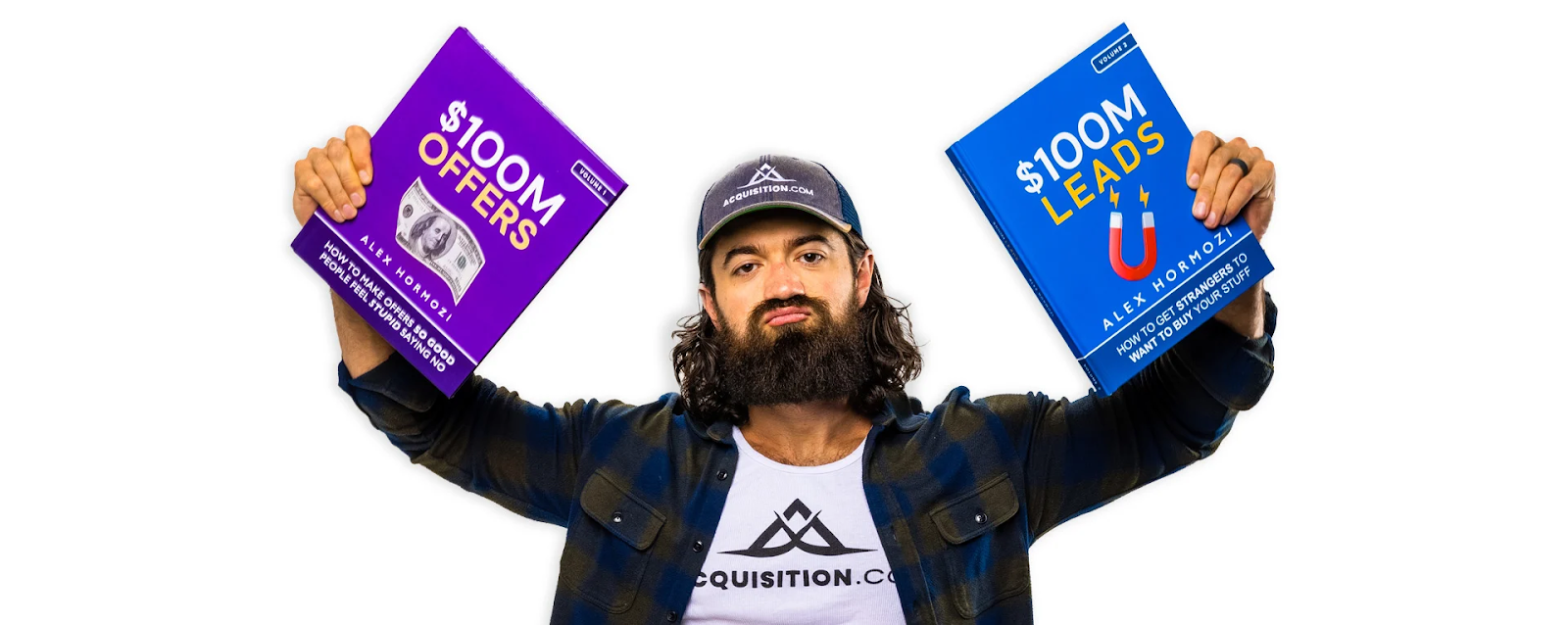
How To Make Offers So Good People Feel Stupid Saying No (Acquisition.com $100M Series)
One-Sentence Summary
$100M Offers Alex Hormozi provides a step-by-step guide to crafting irresistible offers that attract customers and maximize profitability, transforming businesses into revenue-generating powerhouses.
If you don’t already have $100M Offers, a popular book on business, entrepreneurship, marketing, and sales, order it here or get the audiobook for free to dive deeper into the juicy details.
Trademark and Copyright Notice
$100M Offers is a registered trademark of Alex Hormozi and Acquisition.com. This is an unofficial summary and critique of $100M Offers book and is protected by the Fair Use Clause of the Copyright Law.
Introduction
How would you like to create offers so compelling that your customers feel foolish saying no? That’s the bold premise behind $100M Offers by Alex Hormozi. Whether you’re a business owner trying to grow sales or an entrepreneur refining your market strategy, this book provides a roadmap for crafting irresistible offers. The aim is not just to compete on price but to create massive value that differentiates you in the marketplace. Hormozi shares strategies from his experience scaling companies, helping you understand what separates a good offer from a great one.
With a focus on high-value offers, long-term outcomes, and addressing the “massive pain” points of your potential clients, Hormozi presents actionable steps to make your offer irresistible. If you’re ready to transform your business, this book provides real-world examples and step-by-step methods to make that happen.

About Alex Hormozi
Alex Hormozi is a successful entrepreneur and business expert who has built multiple 8-figure companies. His first major business, Gym Launch, helped gym owners grow their businesses exponentially. From there, Hormozi expanded into multiple industries, growing his portfolio to include software, education, and consulting. Known for his straightforward, no-nonsense advice, he has become a trusted voice in the entrepreneurial space.
Beyond $100M Offers, Hormozi has authored Gym Launch Secrets and continues to share his insights on business growth and marketing through his YouTube channel and podcast. His focus on delivering immense value and crafting premium offers makes him a sought-after mentor for entrepreneurs worldwide.
StoryShot #1: Craft Offers That Solve the “Value Equation”
To create an irresistible offer, you need to understand the value equation. Hormozi explains that value isn’t just about what you provide; it’s about how your audience perceives that value. According to the value equation:
- Value = Dream Outcome x Likelihood of Achievement / Time Delay x Perceived Effort
Key Components:
- Dream Outcome: What does your customer want more than anything? Align your offer with that. In order to create real value, you have to align your offer with this dream, making it feel so essential to them that turning it down would feel like missing out on something life-changing. For example, if you’re selling a fitness program, the dream outcome isn’t just about “losing weight” or “getting fit”; it’s about the image of a confident, rejuvenated self that they picture every time they look in the mirror. When your offer connects on this level, it becomes more than a product—it transforms into the pathway to something they deeply crave.By focusing on the dream outcome rather than just features, you position your offer as a solution that gets them closer to their ideal life.
- Likelihood of Achievement: How confident is the customer that they will achieve the outcome with your offer? Increase this through guarantees and proven results. It is about building trust and showing your customer they will succeed with your offer. Customers often have a deep-seated fear of failure—they worry your product might be yet another solution that doesn’t work. To counter this, he recommends building confidence through guarantees, proven testimonials, and examples of past successes. Take the story of a young entrepreneur, Mike, who was skeptical about a business course promising rapid revenue growth. However, seeing testimonials from others like him and a money-back guarantee eased his hesitation. The company’s guarantee created a sense of safety that allowed him to make the purchase confidently. This assurance increased the perceived likelihood of achievement and helped him see this course as an investment, not a risk.
- Time Delay: How fast can they expect results? Faster results increase perceived value.
- Perceived Effort: How easy is it to use your product/service? The less effort required, the more valuable your offer.
“Time Delay” and “Perceived Effort” components significantly influence how customers judge the value of your offer. Reducing time delay — by promising quicker, tangible results — and minimizing perceived effort you can greatly elevate the appeal of your offer. Imagine a language-learning app that promises fluency in six months but has a complex, time-intensive process. Now, compare it to an app that promises conversational fluency in 30 days with just a few minutes a day. The latter feels much more achievable, almost “too good to pass up.” Customers crave quick wins and minimal effort; they want to feel they can incorporate your solution seamlessly into their lives. By optimizing for time and effort, you ensure that the offer isn’t just compelling but feels feasible and immediate, key components for a truly irresistible value proposition.
By addressing these key areas, you’ll build an offer that feels too valuable to turn down. Hormozi stresses that you should aim to minimize effort and time while maximizing the likelihood of success and dream outcomes. This is the foundation of an unmatchable value proposition.

StoryShot #2: The Right Market Is Critical
Even the best offer won’t convert if you’re aiming it at the wrong audience. Hormozi emphasizes the necessity of identifying and targeting a “starving crowd”—a market segment that has unmet needs and is desperately seeking a solution. This group not only craves a valuable product but is also willing to pay for something that solves their problems. Without focusing on the right market, your business could fall into the trap of offering a compelling solution to people who don’t see its relevance, leaving you struggling to gain traction in a bad market with little demand.
One of the key strategies for connecting with this “starving crowd” is to first capture their attention through lead magnets—free offers that deliver initial value in exchange for contact information. By providing a taste of the value your product can offer, you prime potential customers for your main offer. Hormozi stresses that a valuable product alone is not enough; it has to be presented to a market that already has the desire for it. Lead magnets help filter your audience, ensuring you’re investing resources in those who are more likely to convert.
Steps to Find the Right Market:
- Identify Deep Desires. What does your target audience want, but doesn’t yet have? The first step to finding the right market is to uncover the deep desires of your target audience—those wants or needs they haven’t yet been able to satisfy. This often goes beyond surface-level desires to address emotional or personal aspirations. For example, if you’re in the fitness industry, many people don’t just want to “get fit”—they want to feel confident, energized, and comfortable in their own skin. Think of products like Peloton or Lululemon, which cater to this deeper need by not only providing equipment or clothing but also promoting a lifestyle of health and self-empowerment. When you understand what truly motivates your audience, you can position your offer as the path to their ideal self, making it more compelling and relevant.
- Validate Demand. After identifying desires, it’s crucial to validate that there’s real demand for your offer. Tools like Google Trends, customer surveys, and competitor analysis can help you gauge interest levels before you invest in creating the product. For instance, if you’re considering a new type of skincare product, you might use Google Trends to see if terms related to your product idea (like “natural skincare” or “eco-friendly beauty”) have been gaining popularity. Additionally, running a survey within a relevant online community, such as a Facebook group for skincare enthusiasts, can provide direct insights into what your audience wants. Validation ensures that the interest is more than just a guess, saving you from the costly mistake of developing a product no one wants.
- Look for Unmet Needs. Finding unmet needs involves examining the market to see where existing products or services fall short. Often, these gaps reveal opportunities to innovate or differentiate your offer. For instance, if you notice that meal delivery services tend to focus on calorie-controlled options but rarely address specific dietary needs like low-sodium or allergen-free meals, this could be an underserved market. By filling these gaps, you position your product as a much-needed solution, making it stand out to customers who feel ignored by mainstream offerings. This is how Airbnb initially entered the market, providing affordable, unique accommodations at a time when travelers felt limited by the high prices and lack of variety from traditional hotels.
- Focus on Niche Markets. Rather than trying to serve a broad audience, hone in on a specific, smaller group that has a clear, identifiable pain point. By narrowing your focus, you can tailor your messaging and offerings to resonate more deeply with that group, often making it easier to achieve traction and brand loyalty. For instance, instead of creating a general productivity app, you might develop a tool specifically for remote-working parents who struggle to balance work and home life. This focus allows you to address their unique challenges directly, like managing time effectively in a home setting or juggling childcare with work responsibilities. By concentrating on niche markets, you not only reduce competition but also foster a loyal audience that feels genuinely understood by your brand.
Actionable Note: Once you’ve identified your ideal market, build your offer specifically around their needs. Targeted offers outperform generalized ones because they speak directly to the customer’s desires. This also avoids the commodity problem where you are stuck competing on price instead of value.

StoryShot #3: Premium Pricing Reflects Premium Value
Contrary to what many entrepreneurs believe, raising prices can actually increase your sales—if your offer delivers much value. Alex Hormozi argues that the issue isn’t pricing itself, but rather the perceived value of the offer. If you’re charging a low price for something that has the potential to be a high-value product, customers may assume it lacks quality or won’t meet their expectations. By focusing on delivering immense value and addressing your customer’s needs directly, you can justify higher pricing. When customers perceive that they are getting a premium experience or a solution to their specific problem, they are often more than willing to pay a higher price for it.
This strategy is especially effective for businesses offering high-cost services or specialized products, such as fitness programs, health and wellness packages, or consulting services. These are areas where customers are not just paying for the product itself, but for the transformation or outcome it provides. Hormozi’s money model emphasizes the importance of aligning your pricing with the perceived value of your offer, ensuring that it reflects the much value you provide. By positioning your offer as a high-value solution to your customer’s pressing needs, you’re able to command premium pricing without facing resistance. The key is to create an offer that feels worth every penny, making it easy for customers to justify the investment.
Hormozi’s Tips for Premium Pricing:
- Add More Value: Instead of lowering prices, add additional components to make the offer irresistible.
- Frame the Price: Compare your offer to high-priced alternatives to position yours as a deal.
- Use Anchoring: Offer high-priced options alongside your main offer to make it seem more affordable.
Example: Gym memberships often come with high prices, but those that bundle premium services like personal training, nutrition coaching, and exclusive classes can justify the cost and command premium pricing. This is particularly effective in industries with a healthy food component, as clients often pay more for perceived health benefits.

StoryShot #4: Use Guarantees to Remove All Risk
One of the most effective ways to make your offer irresistible is to remove any perceived risk for the customer. In business today, customers are often hesitant to commit to a purchase because they fear it won’t meet their expectations, leaving them unsatisfied and out of pocket. To combat this hesitation, Hormozi suggests incorporating unbeatable guarantees into your offer that make it almost impossible for customers to refuse. By minimizing or eliminating the risk associated with their purchase, you make the decision easier for the buyer. When potential clients see a strong guarantee, it gives them confidence that your business stands behind its product or service, and it drastically increases the perceived likelihood of achievement. Essentially, you’re saying, “We are so confident that you will get the result you want, we’ll take the risk off your shoulders.”
These guarantees often come with clear terms of the agreement, ensuring transparency and building trust with your audience. For instance, a money-back guarantee offers a full refund if the customer isn’t satisfied, while a success guarantee promises specific outcomes, such as “Get X result in Y time or your money back.” These types of guarantees also serve as key performance indicators for your business, as they force you to focus on delivering the value you’ve promised. A successful business doesn’t shy away from guarantees — instead, it leverages them to build trust, reduce resistance, and ultimately attract more potential clients. By offering a no-risk trial, for example, you remove any barriers for new customers, making it far more likely they’ll take the plunge and give your product a try.
Types of Guarantees:
- Money-Back Guarantee: Full refund if the customer isn’t satisfied.
- Success Guarantee: Promise specific results (e.g., “Get X result in Y time or your money back”).
- No-Risk Trials: Offer a free trial period to remove barriers for new customers.
By eliminating the risk, you increase the likelihood of achievement in the customer’s eyes, making it far more likely they will take the plunge. This also helps establish trust, especially when targeting potential clients who are new to your brand or offer.elps establish trust, especially when targeting potential clients who are new to your brand or offer.

StoryShot #5: Leverage Social Proof for Conversion
Humans are naturally inclined to trust the opinions and experiences of others, which makes social proof one of the most powerful tools in marketing. When potential customers see that others have had positive experiences with your product or service, they feel reassured that they’ll achieve similar outcomes. This sense of trust is crucial, especially when customers are considering investing *much money* into a high-value offer. Hormozi stresses that incorporating social proof into your offer—whether through testimonials, reviews, or case studies—demonstrates that your offer has already provided *superior value* to others. This validation serves as a key motivator for hesitant buyers to take action, as they see the *better results* that others have already experienced.
Breaking down social proof into component parts, you’ll find that each type serves a different but complementary role in boosting credibility. Customer testimonials are personal stories that highlight the dream outcomes achieved, while case studies provide detailed examples of how your offer solve specific problems for clients. Additionally, *social media reviews* from platforms like Instagram or Yelp can amplify your *marketing efforts* by showing real-time feedback from a diverse audience. By collecting and strategically showcasing these *component parts* of social proof on your sales page or marketing materials, you create a more compelling, trustworthy offer. This approach not only reassures potential clients but also highlights the *superior value* your product or service provides, reducing concerns over the cost and making the decision to buy feel like a smarter, lower-risk choice.
Ways to Use Social Proof:
- Customer Testimonials: Showcase satisfied customers who experienced the dream outcome.
- Case Studies: Present real-world examples of clients who have achieved success with your offer.
- Social Media Reviews: Highlight positive reviews from platforms like Instagram or Yelp.
Actionable Tip: Collect as much social proof as possible and make it visible on your sales page to boost trust and credibility. This is the best way to reassure hesitant customers, especially if they are worried about spending much money.

Criticism
While $100M Offers is punchy and motivating, much of its advice is repackaged, high-level marketing common sense dressed in a sensational title, with limited nuance on when these tactics break down in different business models or maturities. The book’s focus on dramatic value-price gaps, premium pricing, and aggressive guarantees can also feel overly “guru-style,” minimizing execution risk, survivorship bias, and the capital or traction often required to pull these strategies off safely
Frequently Asked Questions:
What is the $100 Million Offer about?
$100M Offers by Alex Hormozi is a guide to creating irresistible offers that your customers can’t refuse. The book teaches entrepreneurs and business owners how to craft high-value offers that maximize perceived value, reduce risk for customers, and increase conversion rates. Hormozi provides actionable strategies to build offers that drive more sales by solving the value equation, identifying the right market, and using social proof. Ultimately, it’s about scaling your business by delivering immense value and premium pricing that customers are happy to pay.
How long does it take to read $100M Offers?
On average, it takes about 4 to 5 hours to read $100M Offers cover to cover, depending on your reading speed. The book is around 208 pages and filled with practical insights that can be absorbed fairly quickly due to its straightforward, actionable content.
How much is Alex Hormozi’s net worth?
As of 2024, Alex Hormozi’s estimated net worth is over $100 million. His wealth comes from scaling multiple businesses, including Gym Launch and his portfolio of companies in various industries like software, consulting, and education.
Rating
How would you rate $100M Offers book by Alex Hormozi?
PDF, Free Audiobook, Infographic and Animated Summary
This was the tip of the iceberg. To dive into the details and support Alex Hormozi, order it here or get the audiobook for free.
Did you love the lessons you learned here? Share to show you care.
New to StoryShots? Get the PDF, infographic and animated versions of this summary of How to Talk to Anyone and hundreds of other bestselling nonfiction books in our free top-ranking app. It’s been featured by Apple, Google, The Guardian, and The UN as one of the world’s best reading and learning apps.

Related Book Summaries
- Sell Like Crazy by Sabri Suby
- Never Split the Difference by Chris Voss
- Building a StoryBrand by Donald Miller
- The 22 Immutable Laws of Marketing by Al Ries and Jack Trout
- Contagious by Jonah Berger
- Purple Cow by Seth Godin
- Pre-Suasion by Robert Cialdini
- Built to Sell by John Warrillow
- Positioning by Al Ries and Jack Trout
- Influence by Robert Cialdini
- Blue Ocean Strategy by W. Chan Kim and Renée Mauborgne
- The E-Myth Revisited by Michael E. Gerber
- The 4-Hour Workweek by Timothy Ferriss
- Good to Great by Jim Collins
- The Art of War by Sun Tzu
- Start with Why by Simon Sinek


 EN
EN  PT
PT  ES
ES  JA
JA  DE
DE  FR
FR  TR
TR  IT
IT  AR
AR  PL
PL  UK
UK  SV
SV  NL
NL  KO
KO