
The Power of Habit Summary | Charles Duhigg
Why We Do What We Do in Life and Business
TLDR: The Power of Habit by Charles Duhigg reveals how understanding the cues and routines that shape our habits can empower us to transform our lives—because when you change your habits, you change your destiny! 🔄
What if I told you that nearly half of everything you do today isn’t a conscious choice, but a habit running silently in the background? From brushing your teeth to checking your phone, your brain is on autopilot. But here’s the twist: those same invisible forces can be rewired to help you succeed, earn more, get healthier, and even reshape society. In the next few minutes, you’ll discover the science-backed playbook to hacking your own habits—and if you stay until the end, you’ll know exactly how to take back control of your life.
Life gets busy. Has The Power of Habit been on your reading list? Learn the key insights now in minutes.
We’re scratching the surface here. If you don’t already have Charles Duhigg’s bestselling book on habits and human behavior, order The Power of Habit here or get the audiobook for free to learn the juicy details.
Introduction
Ever wonder why you do certain things without thinking? Like your morning coffee or your drive to work? Habits guide much of our daily lives, often without us even noticing. But what if you could learn how these patterns work and, more importantly, how to change them?
Charles Duhigg’s important book, The Power of Habit, explores how habits form, how they can be changed, and their big impact on people, groups, and even societies. This summary will share the main ideas about habits, giving you simple ways to change your own life for the better.
Whether you’re trying to improve personal habits or understand how groups behave, this book offers a proven way that has helped many people.
For more tips on getting things done, check out our productivity book summaries collection.
About Charles Duhigg
Charles Duhigg is a top reporter for The New York Times and a writer of popular books. He looks at how science, business, and human behavior connect, making him perfect to write about habits. Duhigg uses careful research and good stories to show us the hidden forces that control what we do. He helps us see how understanding these forces can let us change our lives.
His skill in explaining hard science ideas in easy-to-understand ways has made The Power of Habit a worldwide hit. It’s now a key book in the study of human behavior. Duhigg’s research comes from science studies at places like MIT and Duke University, giving readers real, proven ways to make changes.
This book is for you if:
- You feel stuck in routines you wish you could change
- You want to understand the hidden forces driving your daily actions
- You’re looking for a practical framework to build positive habits and break negative ones
- You’re curious about how habits influence everything from personal success to corporate culture
- You want to leverage the science of habit to achieve your goals more effectively
- You’re interested in organizational change and leadership development
Core Insights
StoryShot 1: The Habit Loop – Cue, Routine, Reward
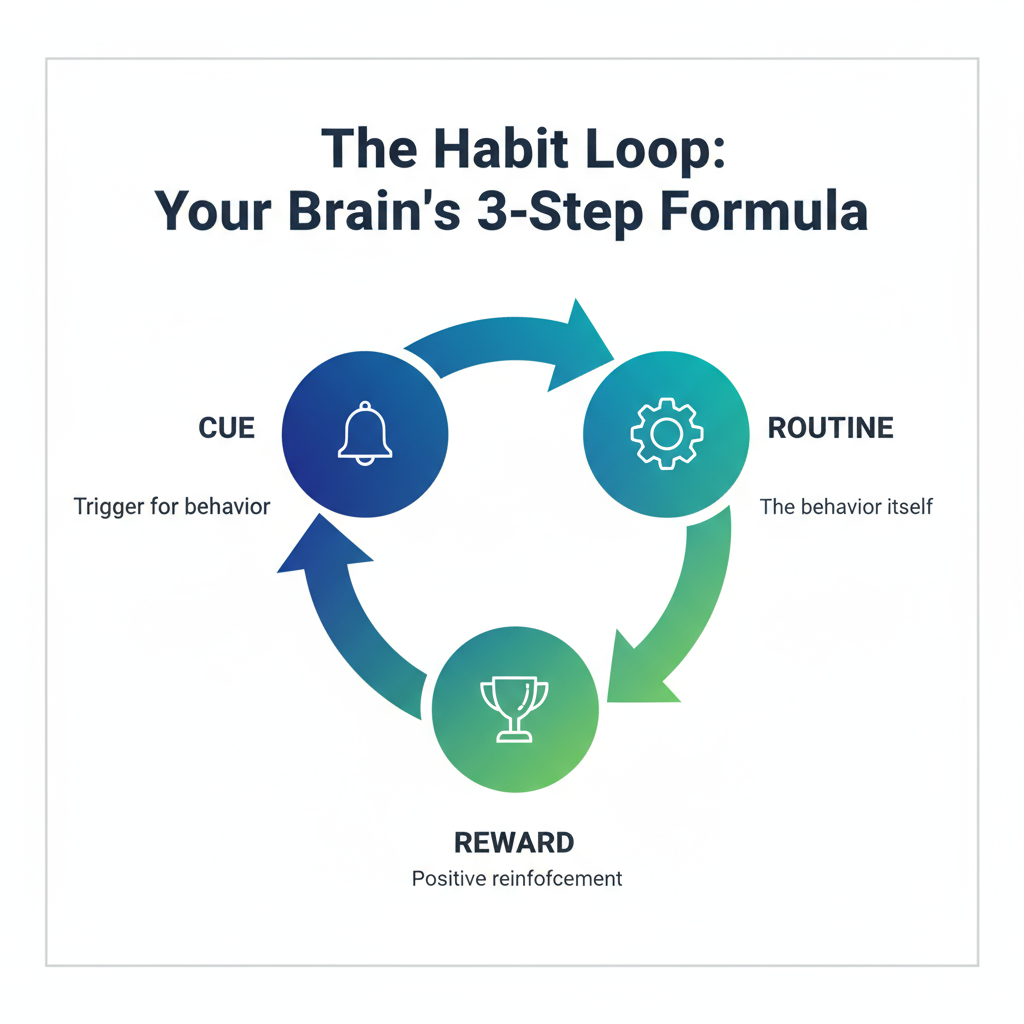
Imagine you’re home, feeling a bit bored. You suddenly want to check your phone. You pick it up, scroll social media for a few minutes, and then feel a quick sense of happiness. This is a perfect example of a habit loop in action.
Duhigg explains the “habit loop,” a brain pattern that controls all habits. It has three parts: a cue (a trigger that tells your brain to start a habit), a routine (the action itself), and a reward (something your brain likes that helps it remember the habit for next time). Knowing this loop is the first step to changing any habit. Think of it this way: When you get in your car, you automatically put on your seatbelt, and you feel safe. This loop is so deep that you probably don’t even think about it. To change a habit, you must first find each part of its loop.
MIT researchers, led by Ann Graybiel, discovered this loop through rat maze experiments. As the rats learned, their brain activity shifted – showing that habits are stored in the basal ganglia, the part of the brain that handles feelings, patterns, and memories. This explains why habits feel so automatic and are hard to change with willpower alone.
StoryShot 2: The Golden Rule of Habit Change – Keep the Cue and Reward, Change the Routine
Many people try to stop bad habits completely, but this often doesn’t work. Your brain still wants the reward, and the trigger still makes you do the old routine. This is why most tries to change habits fail.
The Golden Rule of Habit Change says that to change a habit, you should keep the old trigger and the old reward, but put in a new action. This uses the brain paths you already have, but guides your behavior to something better. For example: If you usually eat a cookie in the afternoon when you feel tired, instead of trying to stop eating anything, you could eat an apple or take a short walk. Both of these still give you an energy boost and are healthier choices.
By choosing a new action that gives you the same good feeling, you can slowly train your brain to do healthier things without always fighting yourself. This method works very well for beating addictions and strong habits, as many studies on addiction recovery show.
Instead of reaching for his phone when he felt stressed, StoryShots founder Farid Behnia paused and took a deep breath.
StoryShot 3: Keystone Habits – The Habits That Matter Most
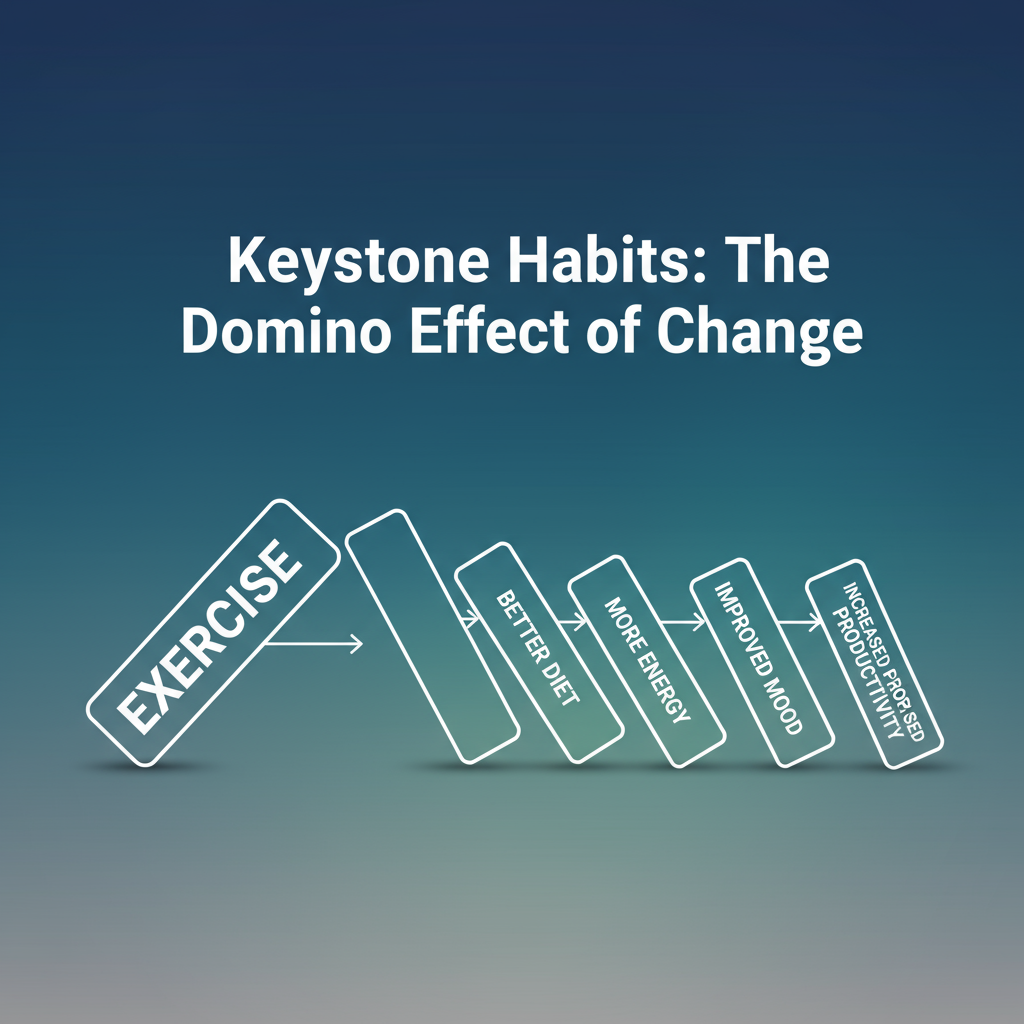
It can feel hard to change many habits at once. Where do you even start when everything seems to need fixing? This is where “keystone habits” come in.
Duhigg talks about keystone habits – these are single habits that, when you start them, naturally lead to other good changes in different parts of your life. They create a ripple effect, making other good habits easier to pick up and keep.
Exercise is a very strong keystone habit. When people start exercising regularly, they often begin to eat better, work harder, smoke less, and are more patient with others. The good feelings and discipline from exercise spread to other areas of life.
Duhigg’s most famous case study is Paul O’Neill at Alcoa. When O’Neill became CEO, he focused obsessively on one keystone habit: worker safety. This single change sparked ripple effects across the company – improving communication, productivity, and profitability. Within a decade, Alcoa’s market value multiplied.
Other common keystone habits include meditation, writing in a journal, making your bed every morning, and tracking your money. The key is to find the habit that will cause the most positive changes for you. For more ways to build good routines, read our summary of Atomic Habits.
Focusing on one keystone habit can lead to many good changes, making you feel better overall. It makes self-improvement feel less scary and more possible. It’s about finding the best way to start a change.
StoryShot 4: Willpower – The Most Important Habit
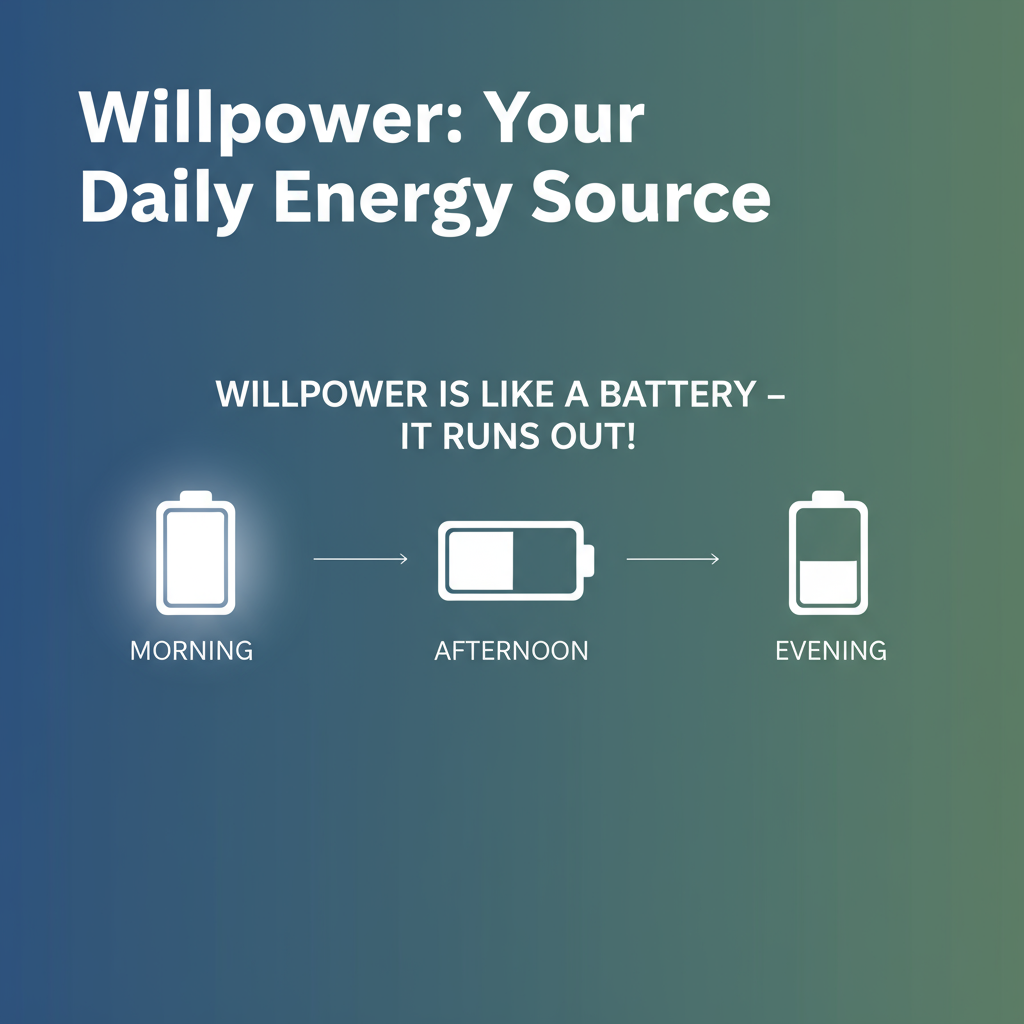
SEO Caption: A viral visual showing willpower as a smartphone battery. It depicts a full battery in the morning and a drained battery by evening, with the bold text: ‘WILLPOWER IS LIKE A BATTERY – IT RUNS OUT!’ This shocking visual explains why your self-control fades throughout the day and how to recharge it. Share this image to help others understand the truth about willpower!\n\nThink of willpower like a battery that runs out when you use it. Just as you wouldn’t blame your phone for dying after a lot of use without charging, don’t blame yourself when your willpower gets low without enough rest.
Willpower isn’t endless; it’s like a muscle that gets stronger with practice but also gets tired. Duhigg says willpower is a habit itself. Making it stronger in one area can greatly help other parts of your life. Studies from Stanford University show that people who do small acts of self-control, like making their bed each morning or keeping track of their spending, have more willpower for bigger things later in the day. This steady practice builds what experts call “willpower muscle.”
One of Duhigg’s standout examples is Starbucks. The company trained baristas with detailed routines to handle stressful customer situations. By turning willpower into a habit, employees learned to stay calm under pressure — and Starbucks built a stronger, more consistent brand experience.
This means a lot: instead of just hoping for motivation, which often fades, you can build willpower as a regular habit. This is very useful for business owners and professionals who need to stay focused and disciplined for a long time.
StoryShot 5: Belief – The Catalyst for Change
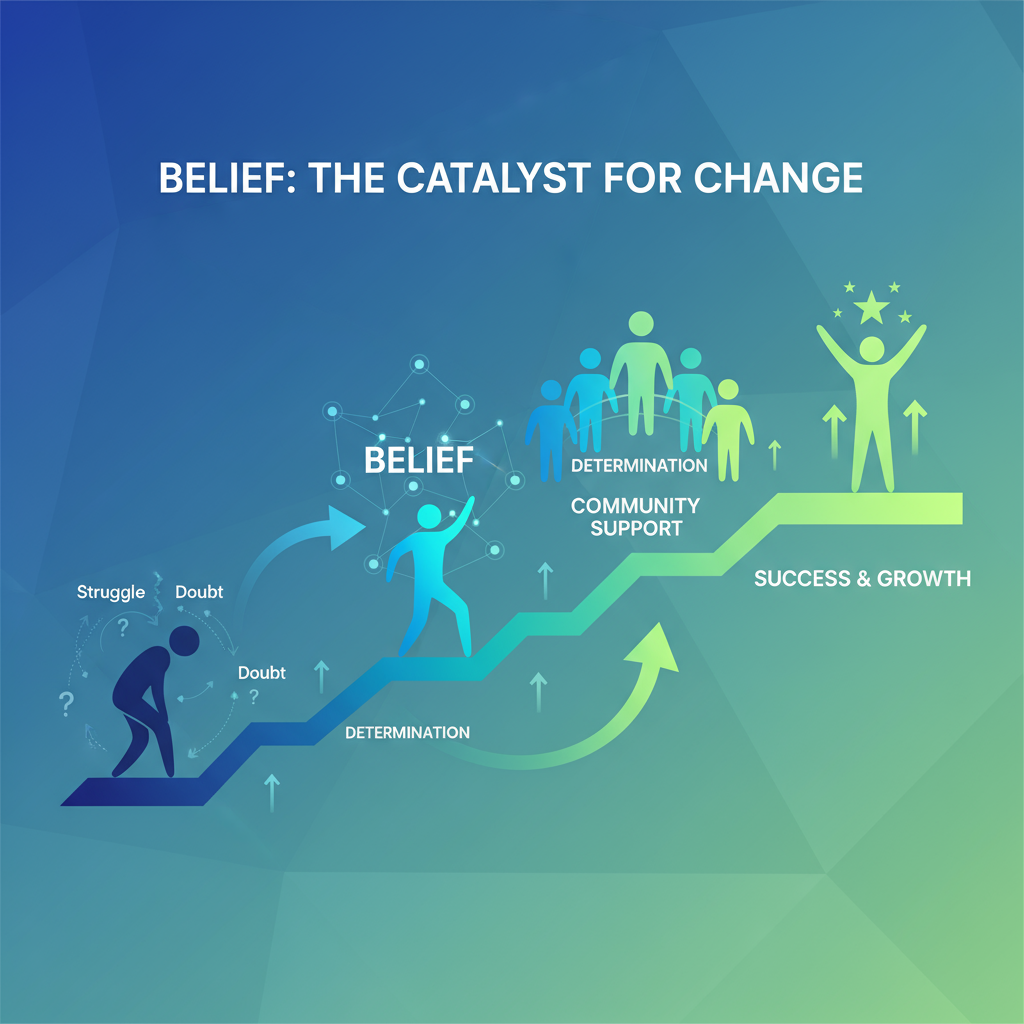
Even if you understand the habit loop and want to change, many people fail because they don’t believe they can change, especially when things get tough. This is a very important part of changing habits.
Duhigg stresses that belief is key to keeping new habits. When people believe change is possible, especially with support from others, they are much more likely to succeed. This belief often comes from seeing others succeed or getting help from a group.
Alcoholics anonymous (AA) is a great example. The program helps change habits, but its success largely depends on members believing they can beat their addiction. This belief is made stronger by the group’s support and shared stories.
Building a strong belief in your ability to change, often with social support, gives you the mental strength to handle problems and stick to new habits for a long time. This is why having people to keep you accountable and support groups work so well.
What about you – what’s one habit you’ve tried to change but struggled to believe you could? Share your story with us on your favorite podcast app or at getstoryshots.com.
StoryShot 6: How Companies and Movements Create Habits
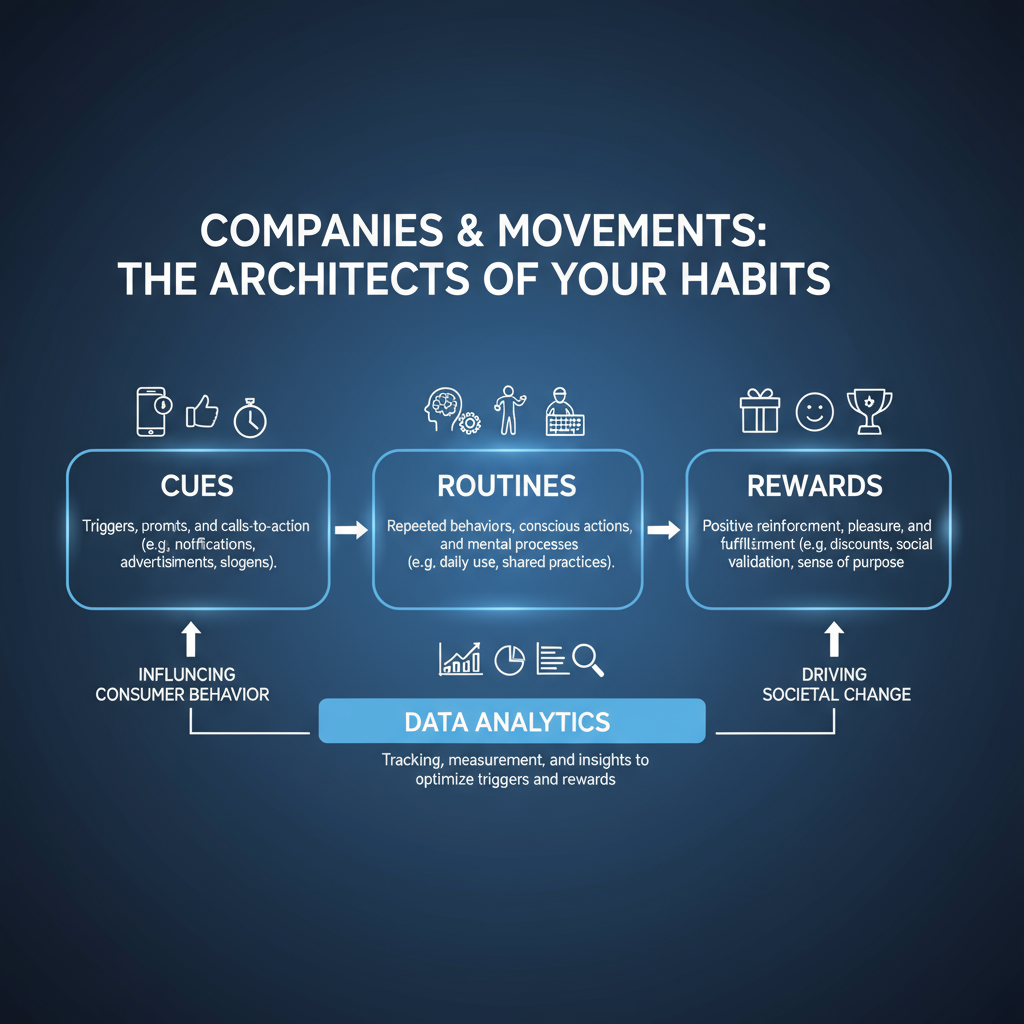
Habits don’t just control people; they also guide groups and social movements. It can be hard to change these patterns. Knowing this is very important for leaders and those who want to make changes.
Duhigg shows how successful companies and social movements purposely create and use habits to reach their goals. This means understanding what triggers and rewards people in their target group, then designing ways to encourage desired actions.
For example, Target famously used data to find out what pregnant women were buying. This let them sell baby products even before the women told anyone they were pregnant.
Another famous story is Rosa Parks. Her quiet act of defiance sparked the Montgomery Bus Boycott, but the movement spread because of the social habits of friendship and community ties. People didn’t just protest for her — they joined because skipping the boycott would have broken social expectations with their church groups, neighbors, and friends.
In the same way, the Civil Rights Movement changed the habits of a nation, creating new ways of acting and rewards for joining in.
By understanding and guiding the habits of groups, organizations can cause big changes in behavior. This could be changing what people buy or getting them to join a social cause. This shows how powerful habits are beyond just one person, and why organizational psychology is now such an important field.
StoryShot 7: The Neurology of Free Will – Are Habits Our Destiny?
Since habits are so strong, you might wonder if we truly have free will, or if we are just controlled by our old patterns. This deep question affects how we try to change.
Even though habits are deeply set in our brains, Duhigg says they don’t have to control our future. We can purposely find our habit loops and choose to change them. The key is to be aware and make a real effort, using the right plans.
The story of a woman who killed her husband while sleepwalking, a habit she had for years, shows the thin line between automatic actions and conscious choices. The court case focused on whether her actions were truly out of her control, or if past choices led to the habit.
In the end, The Power of Habit gives us a hopeful message: habits are strong, but they can be changed. By knowing how they work, we can take charge of our lives, one habit at a time, and use our free will more effectively.
But habits aren’t just personal. They’re shaped by the environments we live in – and the communities around us.
StoryShot 8: Environment Design – Shaping Daily Habits
Your surroundings act like silent coaches, guiding your actions without you noticing. Studies show nearly 40-45% of daily behaviors are triggered by environmental cues – not conscious decisions.
Think of candy at the supermarket checkout. That placement isn’t random – it’s designed to trigger an automatic purchase after decision fatigue. At home, the same principle applies: if your phone is on the nightstand, you’ll likely reach for it before bed.
The key insight: design your environment so good habits are easy and bad ones are hard.
Want to read more? Keep a book on your pillow.
Want to eat healthier? Put fruit in a visible bowl, not cookies on the counter.
Want to work out? Pack your gym clothes the night before and place them by the door.
Want to stop checking your phone first thing in the morning or last thing before bed? Leave it in a separate room.
Change the setting, and your habits often change themselves.
StoryShot 9: The Power of Social Environments
Habits don’t just live in private – they thrive in groups. Organizations and social movements deliberately shape environments to influence behavior at scale.
Charles Duhigg shows how businesses and leaders use this:
Starbucks created a consistent environment of smells, music, and training scripts that guide both customers and baristas.
Casinos remove clocks and windows so players lose track of time.
Target’s predictive analytics team studied shopping patterns and discovered they could identify when women were pregnant – sometimes even before their families knew. By noticing small, unconscious shifts in buying habits (like unscented lotion or vitamin supplements), Target sent coupons for baby products at just the right moment. This case shows how companies shape and anticipate habits at massive scale.
Rosa Parks’ arrest sparked the Montgomery Bus Boycott, but it spread because of existing community habits. Churches, neighbors, and friends reinforced the boycott, making participation the social default and skipping it socially costly.
In Iraq, the U.S. military discovered that riots often started when food vendors kept people in public squares. By removing the vendors, riots dropped sharply.
The lesson: your social environment reinforces your habits. Surround yourself with people and groups that embody the behaviors you want. If you want to exercise more, join a fitness group. If you want to read daily, spend time with readers.
Your environment – both physical and social – is the hidden lever of habit change.
Mental Models for Habit Mastery
The Habit Loop Framework
This model helps you understand habits by breaking them into three parts: cue, routine, and reward. Use it to break down any habit, making it easier to change or replace. How to use it: If you want your kids to read more, find the trigger (like bedtime), the action you want (reading a book), and the reward (like special story time or praise). By planning these parts, you can help them build a reading habit.
Keystone Habit Leverage
This idea means that some habits, once started, cause a chain reaction of other good changes in your life. Focus on finding and building these powerful habits.
How to use it: If you want to get better with money, a key habit could be tracking your spending every day. This simple act often makes you more aware of your money, helps you buy less on impulse, and makes you more likely to save and invest, even if you didn’t plan to.
Willpower as a Limited Resource
Understanding that willpower is like a battery that runs out helps you plan your day better. You can build lasting systems instead of just relying on motivation.
How to use it: If your job uses a lot of your mental energy and decision-making, know that your willpower will be lower by the end of the day. Instead of planning hard tasks like cooking meals or tough workouts for the evening, do them in the morning when you have more willpower. This smart planning helps you use your energy best and makes you more likely to succeed.
Implementation Guide
Here are simple steps to start using the power of habits in your life:
Today (5-minute action): Pick one small habit you want to change. Figure out its trigger, what you do, and what reward you get. Just watch it without judging. Write down what you find in a habit journal.
This week (15-minute action): Choose one main habit you want to start (like daily exercise, writing in a journal, or preparing meals). Plan how you will fit it into your day, focusing on a steady trigger and a clear reward. Start with just 2 minutes a day to get going.
Ongoing practice: Regularly check your habit loops. If you face a problem, remember the Golden Rule of Habit Change: keep the trigger and reward, but change the action. Look for groups that support you to strengthen your belief in change. Think about joining online groups or finding a friend to help keep you on track. For more ways to build habits, read our summaries of books like The 7 Habits of Highly Effective People and Tiny Habits.
Final Summary and Review
The Power of Habit by Charles Duhigg clearly explains why we do what we do. It makes habits easy to understand by breaking them into three parts: the trigger, the action, and the reward. By knowing this basic habit loop, Duhigg helps readers learn how to change their actions. This can be for personal growth, making companies work better, or even changing society. The book shows that habits are not our destiny. We can change them if we understand how they work and use the right methods. The most important ideas include the Golden Rule of Habit Change (keep the trigger and reward, change the action), the power of keystone habits to create positive ripple effects, and the role of belief and community support in making lasting changes. Whether you want to improve your personal life or help your organization change, this book gives you the tools and knowledge you need. Remember: changing habits takes time and practice, but it’s definitely possible. Start small, be patient with yourself, and celebrate your progress along the way.
Related StoryShots You’ll Love
If The Power of Habit resonated with you, explore these related book summaries that dive deeper into personal development and behavioral change:
•Atomic Habits by James Clear: Learn how tiny changes lead to remarkable results through the power of compound growth.
•Mindset by Carol Dweck: Discover how your beliefs about intelligence affect success.
•Deep Work by Cal Newport: Focus deeply in a distracting world.
•The Compound Effect by Darren Hardy: See how small, steady actions add up over time to create huge results.
Explore our full self-improvement category for more life-changing ideas, or look through our business and leadership collection to see how habits shape success in companies.
Ready to change your habits? Get the StoryShots app to instantly read hundreds of book summaries, or start with our habit-building starter pack with the best books on personal change.
Share this summary: Help others discover the power of habits! Share this on social media with #StoryShots #PowerOfHabit #HabitChange #PersonalDevelopment
Rating
How would you rate The Power of Habit based on our summary?
The Power of Habit PDF, Free Audiobook, Infographic and Animated Book Summary
This was the tip of the iceberg of The Power of Habit. To dive into the details and support the author, order the book or get the audiobook for free.
Did you like the lessons you learned here? Comment below or share to show you care.
Comment below and let others know what you have learned or if you have any other thoughts.
New to StoryShots? Get the audio and animated versions of this review of The Power of Habit and hundreds of other bestselling nonfiction books in our free top-ranking app. It’s been featured by Apple, The Guardian, The UN, and Google as one of the world’s best reading and learning apps.
Frequently Asked Questions (FAQ)
What is The Power of Habit about?
The Power of Habit explores the science behind habits, how they form, and how understanding them can lead to personal and organizational change.
Can you provide a The Power of Habit summary?
The Power of Habit summarizes the habit loop, which consists of cue, routine, and reward, highlighting how habits can be changed for better outcomes in life.
How can I change my habits according to The Power of Habit?
To change your habits, identify the cue and reward, then experiment with different routines until you find one that fits your goals and maintains the same reward.
What are some key concepts from The Power of Habit?
Key concepts include the habit loop, the importance of belief in changing habits, and the role of keystone habits in transforming lives.
The Power of Habit is authored by Charles Duhigg, who combines research and storytelling to explain how habits work and how they can be changed.
What are keystone habits in The Power of Habit?
Keystone habits are small changes or habits that can lead to larger transformations in other areas of life, often creating a ripple effect.
How does The Power of Habit relate to success?
The Power of Habit suggests that understanding and changing habits can significantly contribute to personal and professional success by improving productivity and focus.


 EN
EN  PT
PT  ES
ES  JA
JA  DE
DE  FR
FR  TR
TR  IT
IT  AR
AR  PL
PL  UK
UK  SV
SV  NL
NL  KO
KO